












Turning shocks into tailwinds: unlocking commercial capital for climate solutions in emerging markets
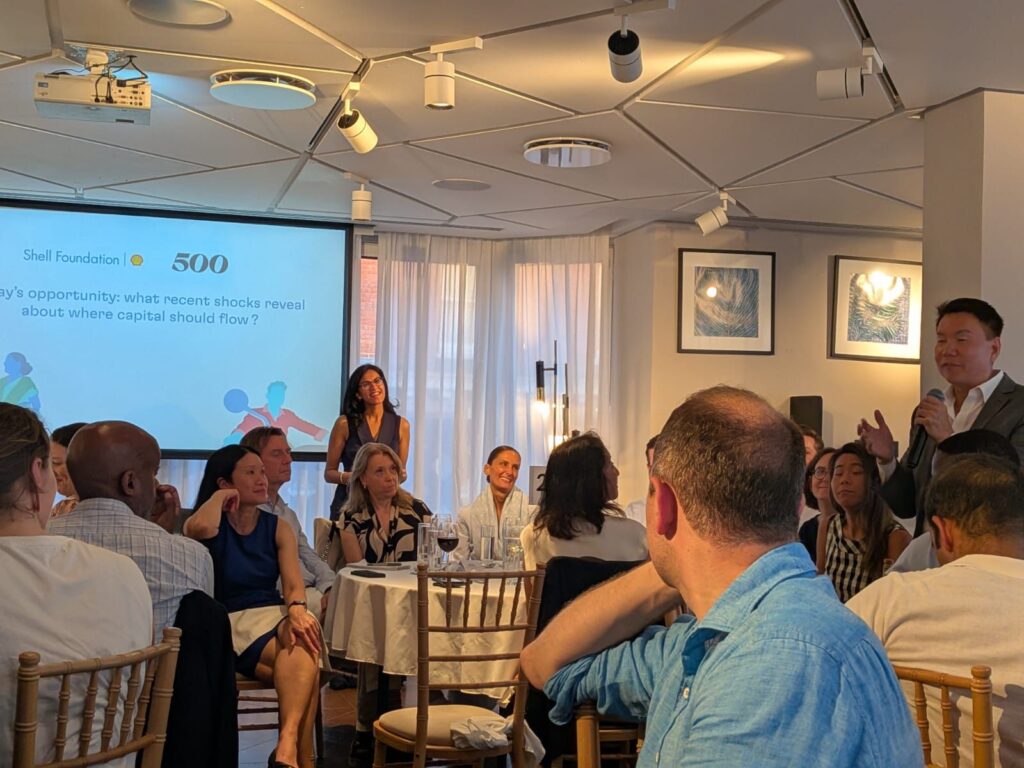
Reflections from a private dinner co-hosted by Shell Foundation and 500 Global during London Climate Action Week .

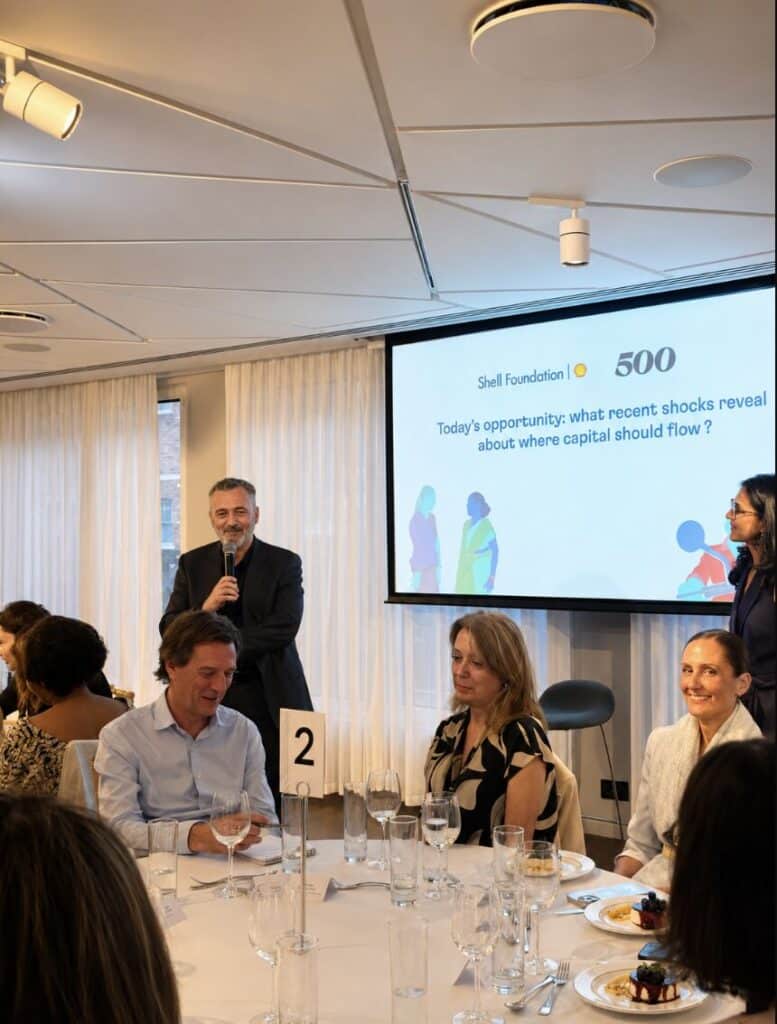
As part of London Climate Action Week, Shell Foundation and 500 Global co-hosted a private dinner for around fifty senior leaders from across investment, philanthropy, development finance and entrepreneurship. The evening was held under the Chatham House Rule, so we share here the themes of the conversation rather than the voices of individual participants. The question before the room was simple to ask and difficult to answer: how do we unlock the commercial capital needed to scale proven climate solutions across Africa and South Asia, at the pace the moment demands?
The conversation took place against a turbulent backdrop: an energy security crisis, supply chain disruption and shifting policy across major economies. Beneath that volatility lies a persistent imbalance. Emerging markets and developing economies require around $2.4 trillion a year of climate investment by 2030, yet currently attract just14% of global climate finance, while adaptation funding reaches barely a twelfth of what is needed. The mood around the table, however, was far from despondent: the consistent argument of the evening was that today’s shocks are creating real commercial opportunities, and that the central challenge is enabling capital to move at the pace of demand.

Starting with the customer: an empty chair
The evening opened with an empty chair at the table, representing a customer: a fruit vendor in New Delhi whose cart supports a family of five on around $125 a month. In summer temperatures that regularly reach 40°C, the fruit she bought each morning would spoil within the day. A simple, low-cost solution of a reflective cooling film fitted over her cart, requiring no electricity or machinery, now keeps her produce 10–12 degrees cooler, extends its life to four days and has increased her income by roughly 50%. With more than a billion people at high risk from a lack of access to cooling, she stood in for millions and gave the room its test for the evening:does what we are proposing actually help millions of people like her?

Shocks are creating tailwinds
Three shifts emerged clearly from the discussion. The first is economic: falling solar and battery costs mean that in electric mobility, irrigation and distributed energy, the clean option is increasingly the commercially superior one, converting what was once a “green premium” into a green discount and prompting investors to reclassify entire sectors. The second is a shift in demand, as oil price spikes strengthen the case for electrification and fertiliser supply disruptions direct attention towards soil health, precision agriculture and climate insurance. The third is a shift in policy, with attention moving at last from mitigation alone towards adaptation and resilience.
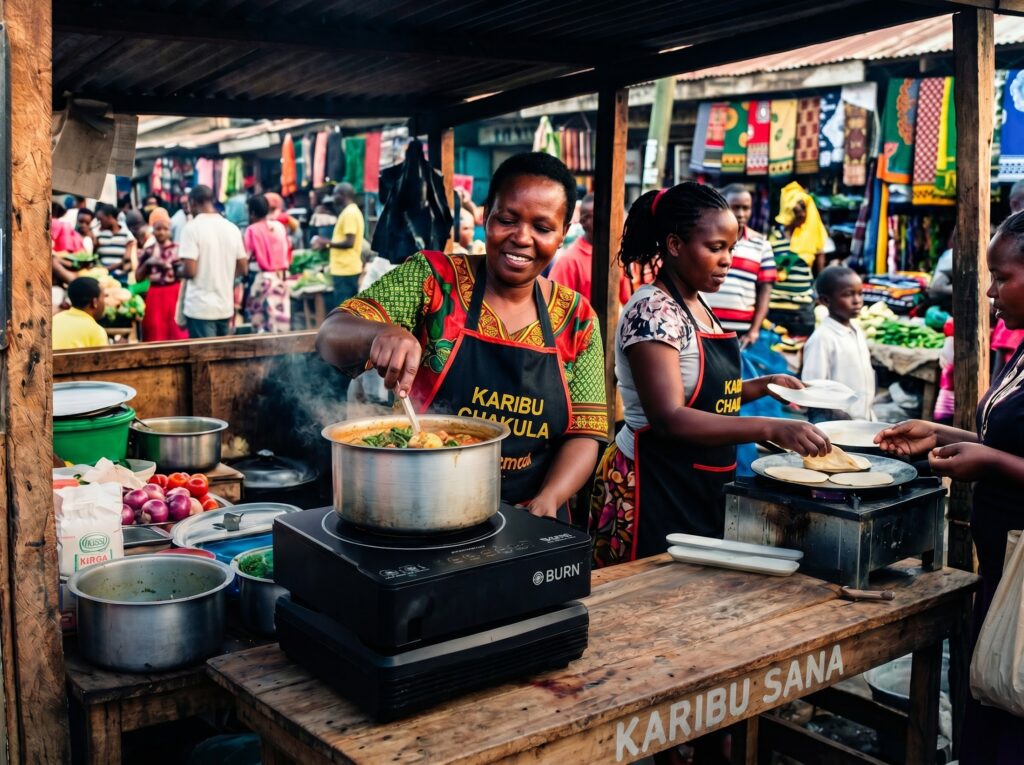
On the ground, an electric cooking pilot expected to take years to reach tens of thousands of food vendors was asked by a state government to double in half the time, en route to several million customers, while anticipatory action programmes are enabling pastoralist communities to sell livestock ahead of a drought rather than into a collapsing market with every $1 invested yielding up to $7 in avoided losses. Farmers’ demand for resilience, meanwhile, is growing even as economic pressure has halved their uptake of credit. Need is growing considerably faster than finance.

What is holding capital back
Why, then, is commercial capital still not flowing at scale? Three barriers recurred throughout the evenings discussions.
- Currency risk. A business that earns in local currency but borrows in dollars carries a risk it cannot control. With hedging frequently unavailable or prohibitively expensive, the additional cost is ultimately passed on to customers, and investments that appear attractive on paper cease to be viable once currency exposure is priced in.
- The data deficit. To most commercial lenders, smallholder farmers remain, in the words of one participant, “a black hole”. Unable to see how customers earn and repay, lenders cannot price the risk and so decline to take it. Digitising agricultural value chains could unlock a significant share of the $170 billion a year of financing that smallholders need but cannot access.
- Revenue risk. Even contracted revenues in these markets often depend on the willingness of governments or utilities to honour their obligations, while many adaptation projects generate no near-term revenue at all. Emerging mechanisms that certify and sell adaptation benefits may offer such projects a bankable income stream.
Alongside these barriers sit the ventures caught between mandates as being too commercial for philanthropy and too high-risk for mainstream finance in the fragile markets that capital rarely reaches at all. Together they define the central problem: the gap between what the sector describes as an investable pipeline and what an investor can actually underwrite.
Philanthropy as risk capital, designed for redundancy
Closing that gap requires a different conception of philanthropic and concessional capital: not as a means of filling funding shortfalls, but as risk capital that absorbs the risks commercial investors cannot yet take, and that plans its own exit from the outset. One question captured this well: how do we meaningfully become redundant?
In practice, local-currency guarantees are enabling domestic pension funds and insurers to invest long-term savings over 15–20 year horizons, addressing the currency problem at its root. Blended structures are mobilising $10–20 of commercial capital for every philanthropic dollar; in one case, a $3 million first-loss guarantee mobilised almost $300 million. Guarantees are also being designed to diminish over time: one funder provided a local bank with full cover at the outset, with the bank committing to reduce its collateral requirements by 50–60% as repayment data accumulated progressively assuming the risk as philanthropy withdrew.
Breaking a two-hundred-year-old link
The most challenging contribution of the evening took a longer view. For two centuries, rising prosperity has gone hand in hand with rising fossil fuel consumption, and asking lower-income countries to remain poor for the sake of the climate is neither just nor realistic. The link between the two must therefore be broken and the evidence suggests it can be. The enterprises represented around the table have raised the incomes of some 1.5 million people by 20% or more while measurably reducing emissions, and have done so largely on a commercial basis. The choice between development and decarbonisation is a false one.
The path forward
The evening closed with four commitments:
- Move from projects to platforms towards diversified, repeatable models that institutional investors can underwrite at scale.
- Change the narrative from risk to opportunity recognising that the commercial case increasingly speaks for itself.
- Dissolve the silos no single actor, whether in philanthropy, development finance, commercial investment or enterprise, holds enough of the answer to act alone.
- Stay close to the customer so that the farmers, vendors and drivers powering the green economy remain the test of every structure we design.
A final, deliberately simple request was made of every guest: to identify one person in the room with whom to continue the conversation, and to act on it. The empty chair will return to the table at London Climate Action Week 2027. The measure of the year ahead will be what has changed for the woman it represents.